If you’ve ever wished your students cared about learning the way they care about their favorite hobby, game, artist, sport, or topic… Passion Projects (also called Genius Hour or 20% Time) are the classroom magic you’re looking for.
A Passion Project is simple in theory: students choose something they genuinely care about, research it, create something meaningful, and share their learning. But the reason Passion Projects succeed (or flop) comes down to one thing:
Structure.
Students need freedom within a clear framework—especially in middle school. That’s why I love using a guided, ELA-friendly resource that supports the entire process without killing student choice.

What is Genius Hour (and why teachers love it)?
Genius Hour is a student-led learning block where students investigate a topic they’re curious about and transform that learning into a product they can share. In ELA, it’s a perfect fit because it naturally strengthens:
- research skills (finding, evaluating, summarizing)
- informational writing (teaching others clearly)
- narrative and creative writing (story + voice + craft)
- speaking and listening (presenting, discussing, reflecting)
- vocabulary growth (domain-specific language)
The best part? Students are motivated because the topic belongs to them.
Boost engagement (even for reluctant learners)
When students get authentic choice, a few powerful things happen:
- They care more. Ownership is motivating—especially for students who usually feel school is something being “done to them.”
- They persist longer. When the topic is meaningful, students will revise, troubleshoot, and problem-solve without you begging them.
- They discover strengths. You’ll see hidden skills emerge: leadership, design, creativity, research, storytelling, organization, empathy.
- They practice real-world learning behaviors. Asking questions, finding answers, synthesizing information, and communicating clearly are lifelong skills.
The biggest misconception: Genius Hour is “unstructured free time”
Nope. Genius Hour only feels like free time when students don’t have a clear plan.
In a strong Passion Project unit, students move through stages: brainstorming → research → planning → creating → presenting → reflecting. The teacher’s job is to coach the process, not control the topic.
Launch Passion Projects successfully (step-by-step)
Step 1: Start with “What do you wonder?”
Before you let students pick “anything,” guide them to a question.
A great Passion Project begins with curiosity:
- “How does ___ work?”
- “Why does ___ matter?”
- “What causes ___?”
- “How can people improve ___?”
- “What can I create to teach others about ___?”
This keeps projects from becoming random posters about a celebrity.
Step 2: Add purpose (the “why” behind the topic)
Middle schoolers do better when they can explain:
- why they chose the topic
- why it matters
- what they hope to discover
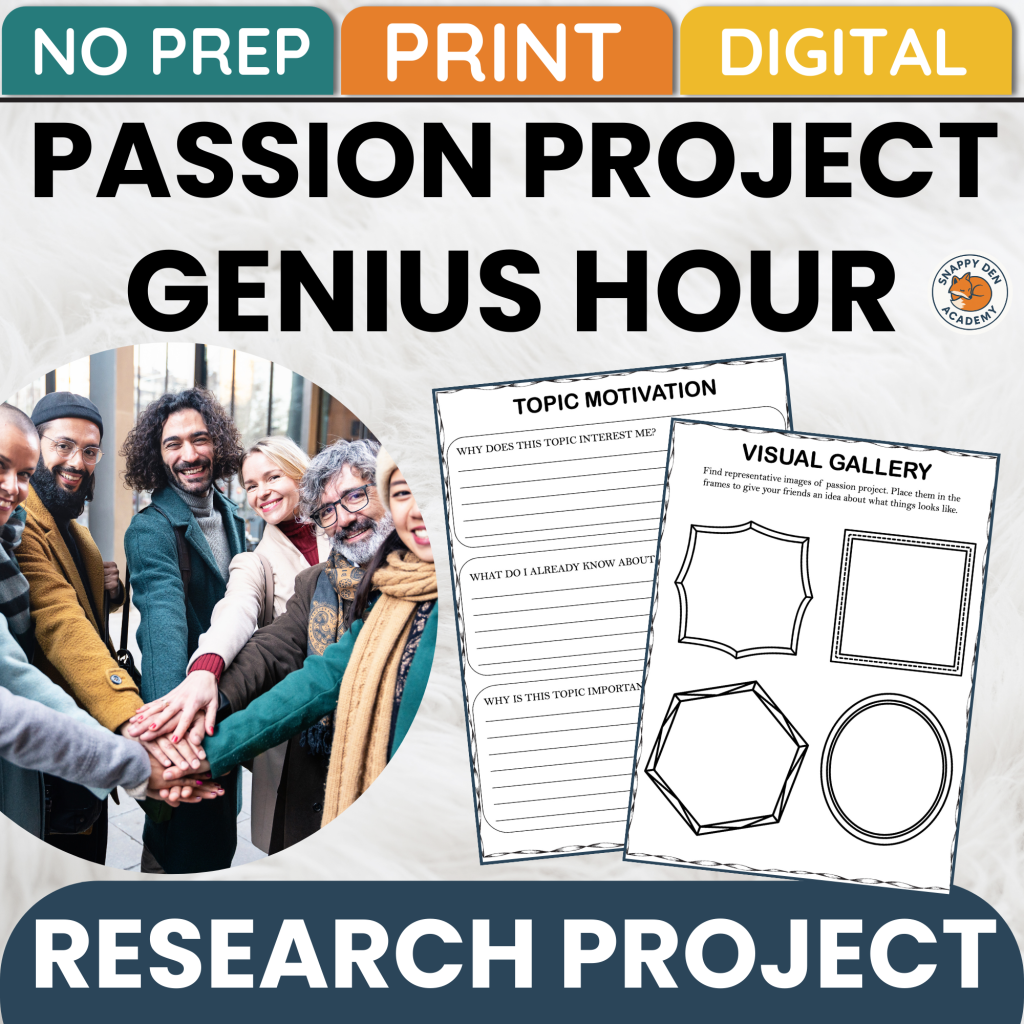
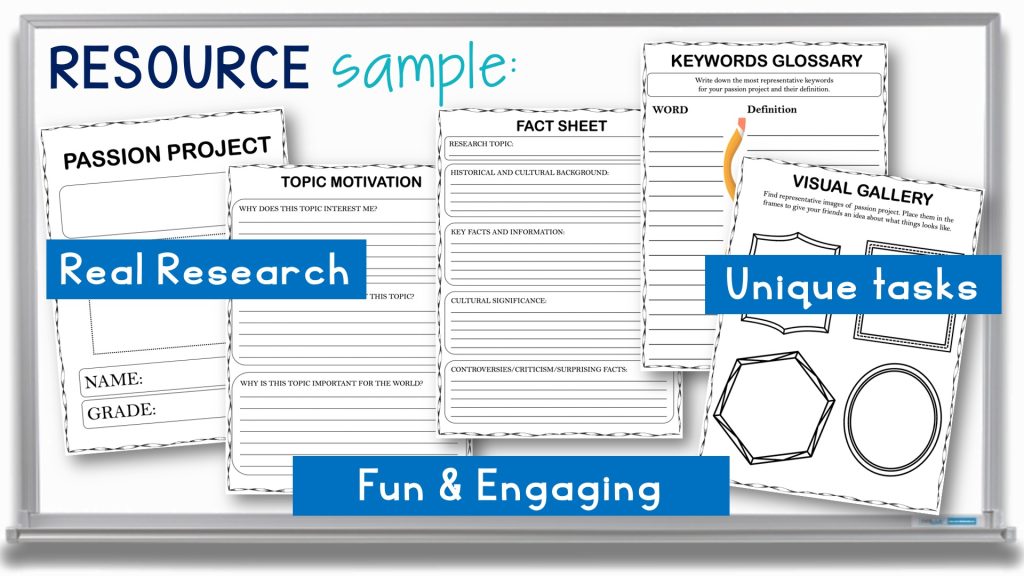
The Passion Project resource includes a Topic Motivation page where students spell this out clearly.
Step 3: Build research routines that are manageable
Students don’t need a 20-source bibliography. They need practice gathering meaningful information.
A simple routine:
- collect key facts
- define essential vocabulary
- organize what matters most
- turn notes into writing
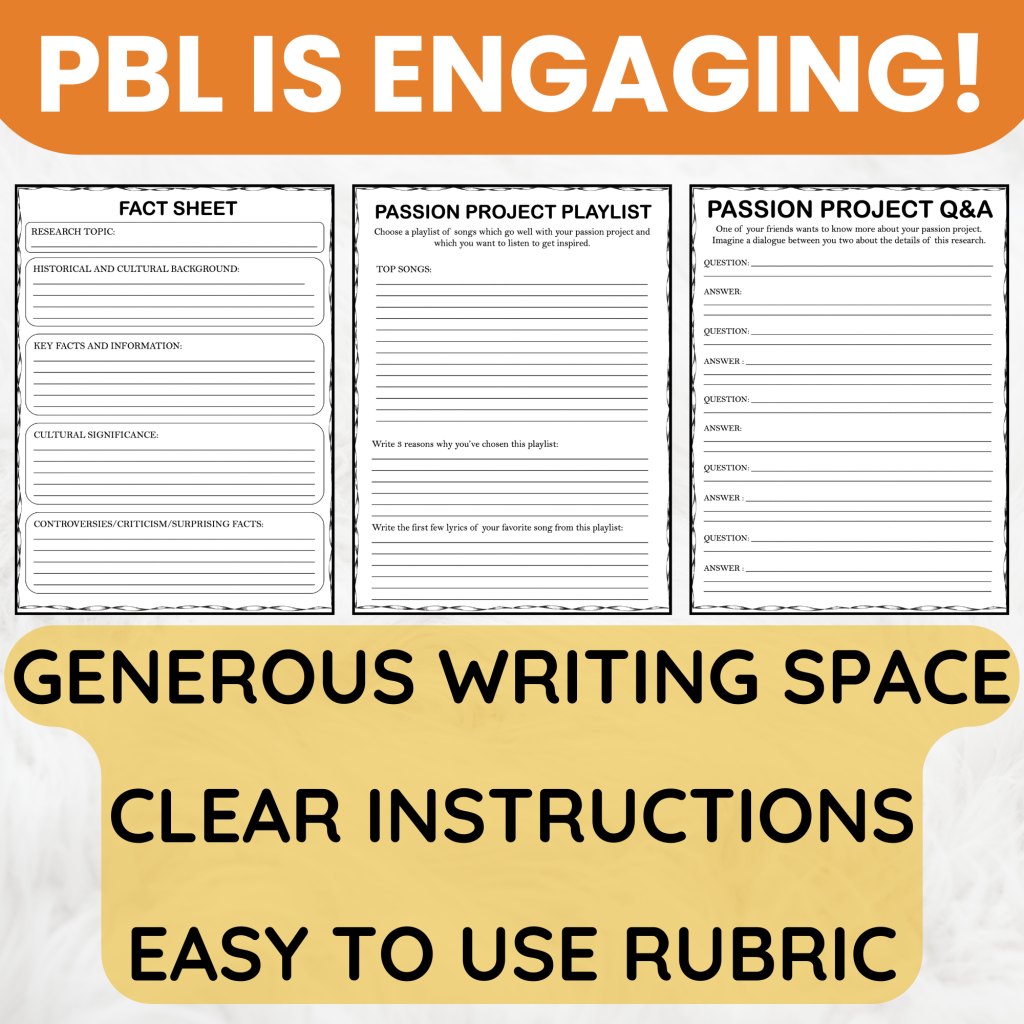
This is supported with tools like a Fact Sheet research organizer and a Keywords Glossary in the resource. )
Step 4: Make the project product clear
The “product” should feel exciting, but it also needs clear expectations.
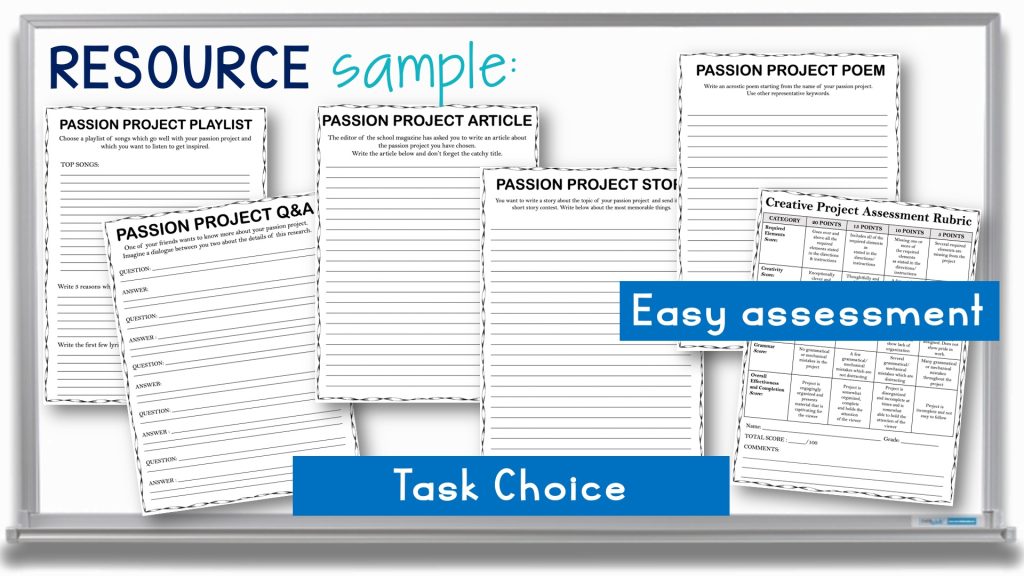
What I love about this resource is that it doesn’t stop at research—it helps students transform knowledge into multiple ELA outputs: an informative article, a story, and a poem, plus inquiry work like Q&A.
That means students aren’t just collecting information—they’re practicing real writing skills in different genres.
Step 5: Add creative elements (without making it fluff)
Creativity doesn’t mean “make it pretty.” It means students communicate ideas in memorable ways.
This pack includes creative components like:
- a Visual Gallery (images/diagrams/infographics + captions)
- a Passion Project Playlist where students connect music to theme and explain why
Those pieces are gold for engagement—and they also strengthen analysis and explanation.
Step 6: Present + reflect
Presentations can be low-pressure:
- small-group share
- gallery walk
- quick “teach the class” mini lessons
- recorded Flip video
- slideshow or poster session
And reflection is where learning sticks: What did I discover? What was hard? What would I do differently?
A realistic timeline for Genius Hour
You can run Passion Projects in different formats:
Option A: Mini unit (1–2 weeks)
Perfect for: end-of-quarter, after testing, short PBL experience
- Day 1: brainstorm + driving question + topic motivation
- Days 2–3: research + fact sheet + glossary
- Days 4–6: writing + creative components
- Days 7–8: final touches + presentations
Option B: Classic Genius Hour (6–9 weeks)
Perfect for: weekly “Genius Hour Fridays,” enrichment block, long-term PBL
- 30–45 minutes per week
- students build skills gradually
- more time for revision and deeper inquiry
Classroom management tips
Here’s what helps the most:
1) Set checkpoints (non-negotiable).
Students should always know what “done” means for the day: one paragraph drafted, glossary completed, facts organized, visuals captioned, etc.
2) Use short conferences.
Two minutes per student can prevent a week of confusion.
3) Teach “productive struggle.”
Genius Hour isn’t about instant success—it’s about learning how to learn.
4) Keep materials consistent.
When everyone is using the same template set, you spend less time explaining and more time coaching.
This is where a template-based unit shines—students aren’t stuck staring at a blank page. They follow a roadmap and keep moving.
How to grade Passion Projects fairly
You don’t grade the “coolness” of the topic. You grade the skills.
A standards-aligned rubric should measure:
- research depth
- writing quality
- organization
- creativity
- presentation
Differentiation ideas
Passion Projects are naturally differentiated because the topic is student-chosen—but students still need scaffolds.
- Struggling writers: provide sentence starters for the article + story components
- Advanced learners: require deeper synthesis, comparisons, or an “impact” section
- EL students: allow bilingual brainstorming and simplified research sources
- Students who freeze with choice: give a “topic menu” or let them pick from passion categories (music, sports, animals, technology, social issues, art)
The resource I use to make Genius Hour simple
If you want a ready-to-run version that works especially well for middle school ELA, here’s what’s inside Passion Project – Genius Hour Ideas PBL Templates:
- Student-friendly project steps, plus templates for topic motivation, research, vocabulary, visuals, Q&A, and multiple writing pieces
- A clear rubric
It’s designed for Genius Hour, Passion Projects, PBL, enrichment, end-of-year projects, writing portfolios, and independent study units.
Passion Projects are worth it!
Passion Projects aren’t just “fun projects.” They’re one of the best ways to teach students:
- how to ask better questions
- how to research with purpose
- how to write for real audiences
- how to create and communicate ideas
- how to own their learning
And once students experience that kind of ownership, you’ll see it show up in everything else you teach.
If you want, tell me your schedule (one-week unit, two-week unit, or weekly Genius Hour), and I’ll map this into a day-by-day lesson plan with mini-lessons + checkpoints that fit your pacing.


I’ve bookmarked this post for future reference. Thanks again!
Thanks for addressing this topic—it’s so important.
You’ve clearly done your research, and it shows.