The first week back after winter break is a weird mix of energy and exhaustion.
Some students come in buzzing with “new year, new me” motivation. Others are still mentally in pajama mode. And most of us (teachers included) are trying to restart routines without turning January into a pressure cooker.
That’s exactly why I love a Word of the Year approach.
Instead of asking students to write big, perfect New Year’s resolutions (that they’ll forget by next Monday), you give them something simpler: one word to guide their choices, habits, and mindset for the months ahead. It’s reflective without being too personal, meaningful without being heavy, and flexible enough for every student in the room.
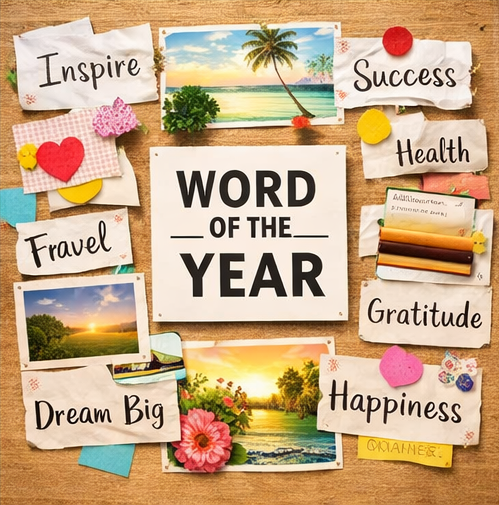
Why “one word” works better than resolutions (especially for teens)
Resolutions tend to fail students for a few predictable reasons:
- They’re often too big (“get all A’s,” “stop procrastinating forever”).
- They’re sometimes too vague (“be better,” “try harder”).
- They can feel performative, like students have to choose an “impressive” goal rather than an honest one.
A Word of the Year shifts the focus from a finish line to a direction.
A student who chooses consistent isn’t promising perfection. They’re naming a value they want to practice. A student who chooses calm is building a strategy for stress. A student who chooses brave can apply it to speaking up, trying out for something, or simply asking for help.
One word becomes a lens:
“Does this choice move me closer to my word… or farther from it?”
And that question is what keeps the activity alive long after January.
The SEL magic hiding inside a single word
A Word of the Year isn’t just cute goal-setting. It’s a simple way to practice core SEL skills:
Self-awareness: What do I actually need this year?
Self-management: What habits would support that?
Responsible decision-making: What choices align with my word?
Relationship skills: How do I want to show up with others?
That’s why this activity works beautifully in ELA, advisory, counseling, or any class that wants to build community without forcing students into oversharing.
In the workbook, students are guided through reflection, goal setting, and vision creation using their word as the anchor—so it’s not just “pick a word and decorate it.”
What’s inside the Word of the Year Workbook
Here’s what you get in the resource (and what makes it easy to implement across grades and settings).
- Word of the Year Ideas (2 pages) to spark inspiration
- Reflection templates (7 pages) that guide students through meaningful goal setting
- Vision board templates (4 layouts) for creative, personalized boards
- Monthly check-ins (12 templates) so students revisit their word throughout the year
It’s designed for grades 6–12 (and works in adult/higher ed settings too), with a strong writing connection aligned to broader writing standards like CCSS CCRA.W.4 and CCRA.W.10.
How to run this as a low-prep January lesson (that doesn’t flop)
You can do this in one class period, but I prefer spreading it across two days so students have time to think and create without rushing.
Day 1: Choose the word + connect it to real life (45–60 min)
- Quick warm-up (3–5 minutes):
Ask students to respond privately:- “What do you want more of this year?”
- “What do you want less of this year?”
- “What’s one area you want to grow in—school, relationships, confidence, habits, mindset?”
- Word exploration (10 minutes):
Let them browse the word ideas pages, circle options, and brainstorm. (This is where reluctant writers shine—because they can choose before they have to explain.) - Narrow to one word (10–15 minutes):
The key move: tell them they’re not choosing the word they already are—they’re choosing the word they need. - Reflection writing (15–20 minutes):
Students use the reflection templates to explain:- why they chose the word
- what it could look like in their day-to-day life
- what might get in the way (and what could help)
Teacher tip: If you want to keep things emotionally safe, give students the option to write about the word in a general way (“Someone who chooses calm might…”) and then personalize only if they want.
Day 2: Vision board + goals + a plan (45–60 min)
- Mini-lesson on goals (5 minutes):
Remind them: good goals are specific and doable. A word is the theme; goals are the actions. - Goal-setting pages (15–20 minutes):
Students connect their word to 2–3 realistic goals—academic, personal, or SEL. - Vision board creation (20–30 minutes):
Students choose a vision board template and create something they’ll actually want to keep. The best boards usually combine:- a short phrase or quote
- a few images/symbols
- 3–5 “proof points” (small behaviors that show the word in action)
- Wrap-up (3 minutes):
Exit ticket: “One small action I can take this week that aligns with my word is…”
Making it stick: the secret is the monthly check-ins
This is where most New Year activities fall apart: students do something beautiful, you hang it up, and then… life happens.
The workbook includes 12 monthly check-in templates so students return to their word repeatedly—without it becoming a big production.
Here are a few easy ways to use those check-ins without taking over your curriculum:
- Use one as a bell ringer at the start of each month (5 minutes, done).
- Make it a quick advisory reflection before breaks or grading periods.
Those tiny touch points turn the word into an actual habit of reflection—which is the whole point.
Classroom community bonus: sharing without oversharing
If you’re building connection in January, a Word of the Year is perfect because students can participate at different comfort levels.
A few simple options:
- Students can share only the word (not the “why”).
- Students can do a gallery walk where classmates leave encouraging notes on sticky notes.
- You can create a “Words Wall” display with just words and first names.
You still get community, celebration, and a fresh start—without making students feel exposed.
Ready-to-use option (and why it’s teacher-friendly)
If you want a meaningful January activity that combines writing, reflection, creativity, and SEL—without spending your Sunday night building templates—this workbook was made for that exact moment.
It’s easy to implement (print and go), encourages deeper thinking and conversation, and blends SEL + goal setting + creativity in one cohesive experience.


Your advice is exactly what I needed right now.