Each February, schools and communities take time to celebrate the achievements, culture, and lasting impact of African Americans—past and present. Black History Month is a meaningful time to pause, learn, and celebrate. It’s also an important opportunity to honor influential people and pivotal moments across the African diaspora, and to ensure these stories are taught with the attention they deserve—not just in February, but all year long.
In the classroom, Black History Month is more than a history lesson—it’s a chance to build deeper thinking skills through powerful texts, meaningful discussions, and student-centered activities. When students explore a variety of voices and experiences, they begin to see how history, identity, and social change connect to the world they live in today. And when we teach it intentionally, we help students move beyond “famous names” to a richer understanding of Black excellence, resilience, and impact.

If you’re ready to move beyond the same old worksheets, the following out-of-the-box Black History Month activities can make a huge difference in student engagement—and in what students truly take away from the month. When lessons are interactive, creative, and student-centered, they don’t just “cover” history… they connect with it.
This year, I’m taking it a step further by celebrating the entire month with activities designed to empower students, spark meaningful conversations, and highlight powerful lessons from Black history and culture.
Want to see exactly what I’m using in class? Keep reading!
1. Black History Month Unit
For the first couple of weeks, my students will jump into a mini Black History Month unit that’s built around paired texts—because the best way to grow understanding is to give students a variety of genres, voices, and formats. Using paired readings also keeps things fresh and makes it easier to differentiate: students can connect ideas across texts, practice multiple skills, and stay engaged without feeling like we’re doing the same activity every day.
On Day 1, we’ll start with an informational article on 19th-century Black people and photography as a tool for social change. Students will read closely, then respond to a mix of open-ended and multiple-choice questions to build comprehension and set the foundation for deeper discussion.
Next, we’ll shift into poetry with “I, Too” by Langston Hughes. We’ll unpack the meaning together, analyze key lines and imagery, and then students will create a one-pager—a fun, creative way to show understanding through visuals, quotes, and written thinking.
Finally, we’ll read the short story “Thank You, Ma’am” by Langston Hughes, and instead of assigning a single one-size-fits-all response, I’m using a story analysis bingo board. Out of all the options, this is the one that consistently works best for my students—because they love choice boards. They get structure and freedom, and I get higher-quality work (with way less groaning).
2. Black History Month Person of the Day Bell Ringers
One of my favorite ways to keep Black History Month meaningful (without taking over the entire class period) is with Black Person of the Day Reading & Writing Bell Ringers. Each day, students spend just a few minutes reading a short, student-friendly passage about an influential Black figure, then respond with a quick writing prompt that builds comprehension, reflection, and critical thinking.
It’s the perfect routine for middle and high school classrooms because it’s consistent, low-prep, and easy to differentiate—plus it naturally sparks discussion and helps students discover a wide range of leaders, artists, scientists, activists, and innovators beyond the names they already know.
3. Biography Research Project
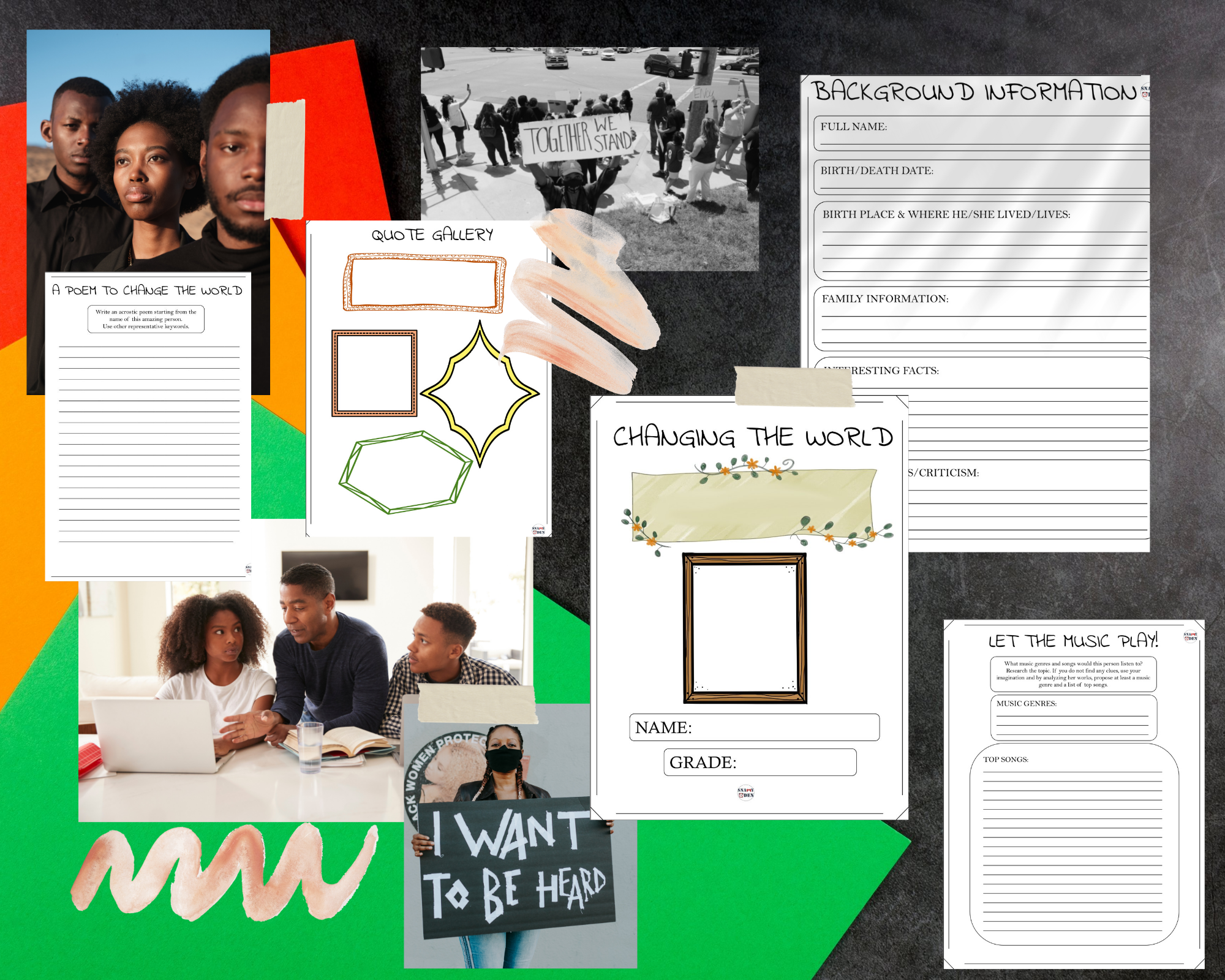
Since my students love projects, we’ll wrap Black History Month with a mini research project where teams choose a famous Black figure to study and present. To keep it engaging (and manageable), I’ll split students into groups and give them a ready-to-use project template—so instead of starting from a blank page, they can jump right into researching and creating. This setup saves me a ton of prep time, and it also makes collaboration smoother because each group member can take ownership of a section and share the workload.
I’ll give teams 10 different project page options to choose from (think biography, timeline, major accomplishments, obstacles overcome, quotes, impact on the world, and more), and they’ll complete at least 5 pages. That way, students get choice and creativity while I still get consistent, standards-aligned work that’s easy to assess.
4. Black History Month Digital Escape Room

In the final week, we’ll do a fun wrap-up to review everything we’ve learned throughout Black History Month—and I’m keeping it high-energy with a digital escape room. Students will “travel” through the game by solving a variety of questions and challenges to unlock the next steps and ultimately escape.
My classes are absolutely obsessed with escape rooms, and anything that’s digital + gamified hooks them instantly in a way traditional review activities just don’t. I love ending the month this way because it feels like a celebration and a meaningful check for understanding—plus it gives this important unit the engaging finale it deserves.
5. Poetry Writing
All month long, I’ll be sprinkling in inspiring poetry writing activities to keep Black History Month creative, reflective, and student-centered. We’ll kick things off with blackout poetry inspired by Civil Rights speeches, and it never fails—my students’ imaginations absolutely light up. There’s something powerful about using real historical words and transforming them into original poems; even reluctant writers get invested because it feels like art and meaning at the same time.
From there, I’ll keep the momentum going with a variety of poetry options so students can experiment with voice and form—acrostic poems, book spine poetry, haikus, rewritten poems, and graphic poetry. The mix keeps things fresh, gives students choice, and helps them connect to the themes of the month in a way that’s personal, memorable, and genuinely fun.
Those are the Black History Month activities I have planned for this year, and I’m honestly excited to dive in. I never want this month to slip by as “just another unit,” because it’s an opportunity to celebrate Black excellence, deepen understanding, and have the kinds of conversations that stick with students long after February ends. That’s why I’m making the most of it—with readings, writing, projects, and engaging review activities that help students connect to history in meaningful ways.
So now I’d love to hear from you: What are your plans for Black History Month?
If you want more tips, tricks and teaching ideas right in your inbox, fill in this form.

